Know what’s inside
“It should not be an equity to know what you consume and your loved ones are in contact with.”
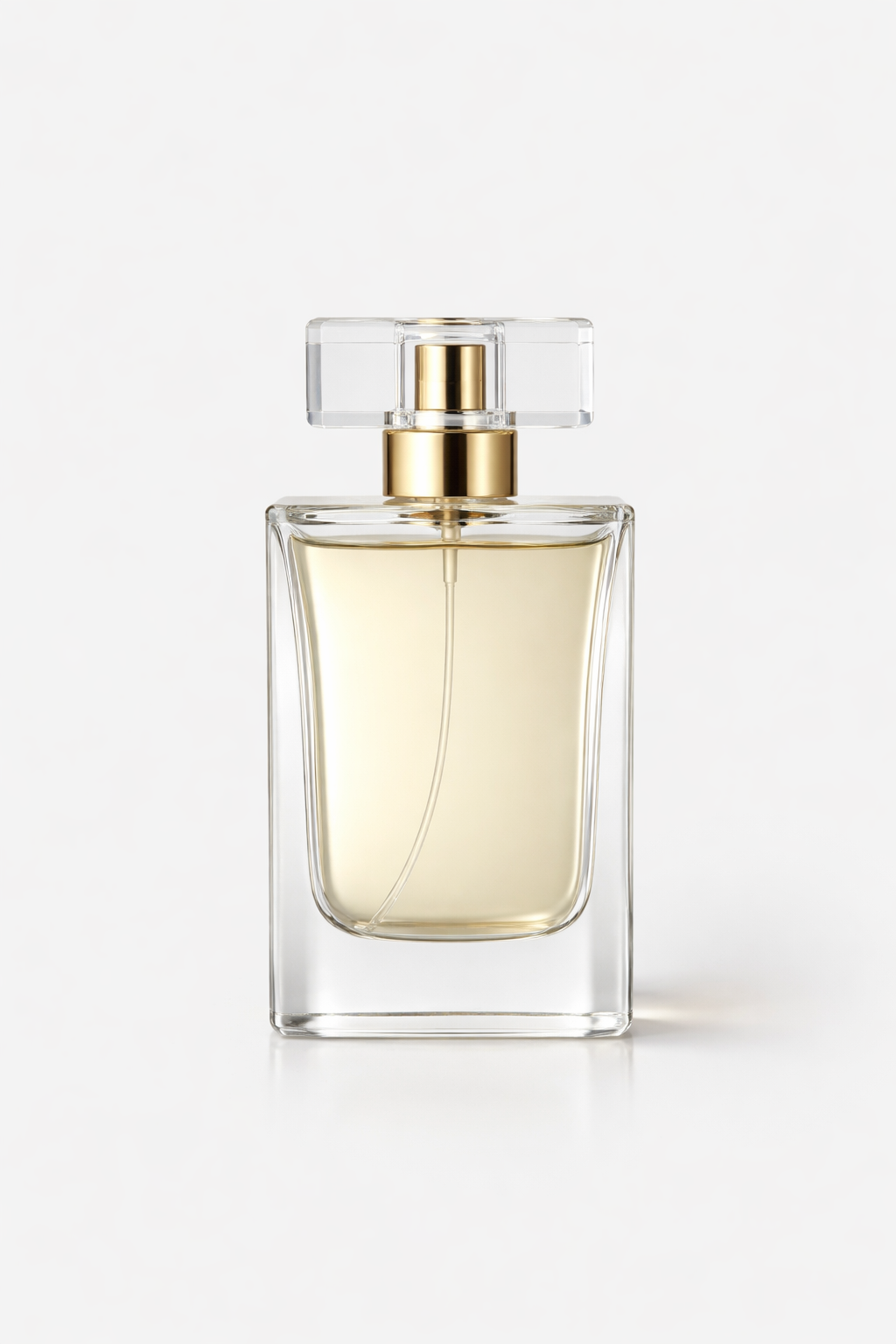
Full disclosure — Formula № 001
Know every note.
Understand every ingredient.
Wear fragrance with intention.
The principle — 01
“It should not be an equity to know what you consume and your loved ones are in contact with.”
“If you look at ingredients of any perfume on the market you’ll often see:
‘Ethanol, Perfume, … Allergens’
with Parfum being possibly over 2000 different chemicals.
This should change.”
“Simple non-clustered formulas, for simple refined perfume.”
“Efficient in telling the story of the wearer and his experience.”
The ledger — 02
A perfume is a composition of named materials — not a single word on a label. Open each entry to read what it is, where it comes from, and what it does on skin.
The opening light of a composition. Pressed from the peel of Citrus bergamia, grown almost exclusively along the Calabrian coast. Sparkling, green-bitter, gone within the hour — and meant to be.
A grass whose value lies underground. The washed, dried roots are steam-distilled into one of perfumery's great anchors: earthy, smoky, faintly grapefruit-like, and remarkably persistent.
Dry, pencil-shaving warmth from the heart of the tree. Virginia cedar is sharper and drier; Atlas cedar rounder and sweeter. It gives a fragrance its quiet architecture.
Thousands of hand-picked blooms yield grams of oil. Rosa damascena, harvested before dawn, gives the honeyed, spicy depth; Rosa centifolia the softer, dewier face. The heart of perfumery for a millennium.
Not the flower — the root. Iris rhizomes are dried and aged for up to three years before distillation into orris butter, among the most expensive materials in perfumery. Cool, powdery, suede-like, melancholic.
A single, precisely defined molecule recreating the warm mineral glow of ambergris — without the whale. Proof that synthetic does not mean hidden: one name, one structure, fully declared.
Once animal-derived, today entirely cruelty-free. Modern white musks are clean, skin-like molecules that give a fragrance its second-skin softness — the part people lean in for.
The collection — 03
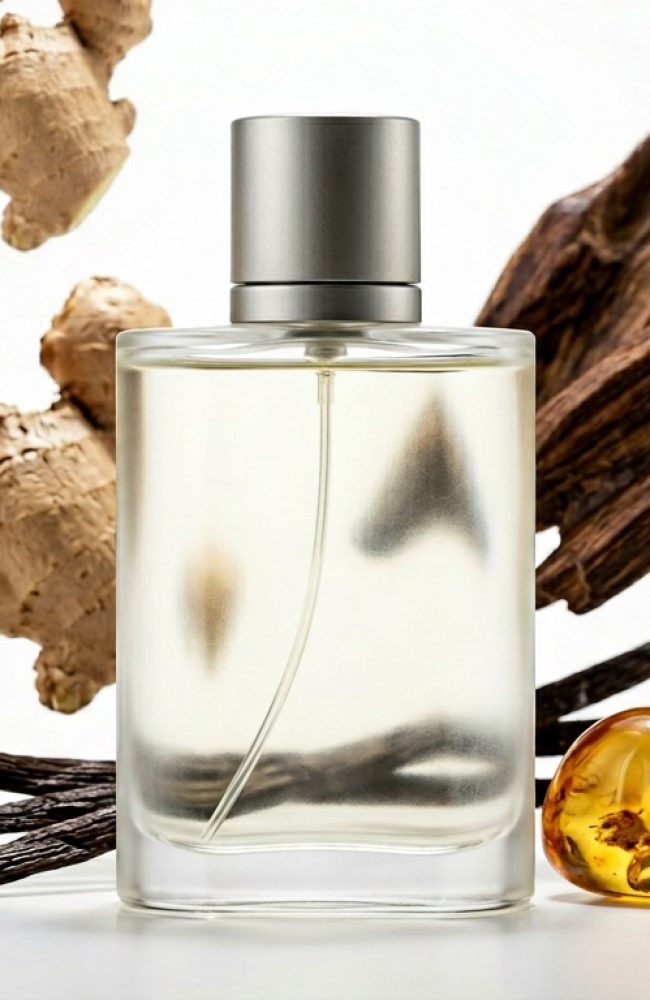 Eau de Parfum
Formula № 001
A walk through a garden where every plant carries a name tag. Luminous, green, and quietly floral — composed to be read as easily as it is worn.
Every material in the bottle is declared on the label. Nothing folded into a single word.
 Eau de Parfum
Formula № 002
A study in presence. Dry woods and warm amber set with deliberate restraint — a fragrance that says less and means more.
Simple, non-clustered, efficient: built from a short list of materials you can name out loud.
The masterclass — 04
Understanding fragrance shouldn't require a chemistry degree — only a guide willing to explain. Choose a chapter.
Chapter 1 — First impression
The first thing you smell and the first thing to leave. Top notes are small, volatile molecules — citrus peels, light herbs, sparkling aldehydes — that evaporate within the first hour.
They are the handshake of a fragrance: brief by design, and a poor basis for judging the whole composition.
Chapter 2 — The character
As the top fades, the heart emerges — florals, spices, green accords. Medium-weight molecules that carry the fragrance through its middle hours.
This is where a perfume's true character lives. When someone remembers what you wore, they usually remember the heart.
Chapter 3 — The foundation
The heaviest molecules — woods, resins, musks, ambers — anchor everything above them. They evaporate slowly, fixing lighter notes in place and extending their life.
The base is what remains on a scarf the next morning. It is the memory of the perfume.
Chapter 4 — The palette
A perfumer composes from a palette of hundreds of materials: essential oils, absolutes, resins, tinctures, and isolated molecules. Each has a smell, a weight, a price, and a story.
Transparency begins here — when a brand is willing to name its palette, the wearer can finally read the painting.
Chapter 5 — From plant to oil
Steam distillation coaxes oil from roots and woods. Cold expression presses it from citrus peel. Solvent extraction captures delicate flowers that heat would destroy, yielding concretes and absolutes. CO₂ extraction does it with pressurized gas and no residue.
The method shapes the smell: the same rose, distilled or extracted, gives two different materials.
Chapter 6 — An honest comparison
Natural materials are complex and alive — a single rose oil contains hundreds of molecules. Synthetics are precise and consistent — one named molecule, one defined effect, often gentler on ecosystems and animals.
Neither is inherently better. What matters is honesty: knowing which is in your bottle, and why it was chosen.
Some things are easier understood through experience than description.
First to know · No noise · Unsubscribe anytime
The manifesto — 05
Transparency over mystery.
Knowledge over marketing.
Ingredients over buzzwords.
Understanding over assumptions.
A fragrance should tell you what it contains.
Not hide behind a single word.