Chapter 1 — First impression
Top notes
The first thing you smell and the first thing to leave. Top notes are small, volatile molecules — citrus peels, light herbs, sparkling aldehydes — that evaporate within the first hour.
They are the handshake of a fragrance: brief by design, and a poor basis for judging the whole composition.
Top — 0 to 1 h
Heart — 1 to 6 h
Base — 6 h onward
Chapter 2 — The character
Heart notes
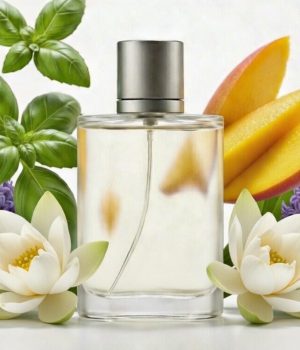
As the top fades, the heart emerges — florals, spices, green accords. Medium-weight molecules that carry the fragrance through its middle hours.
This is where a perfume's true character lives. When someone remembers what you wore, they usually remember the heart.
Top — 0 to 1 h
Heart — 1 to 6 h
Base — 6 h onward
Chapter 3 — The foundation
Base notes
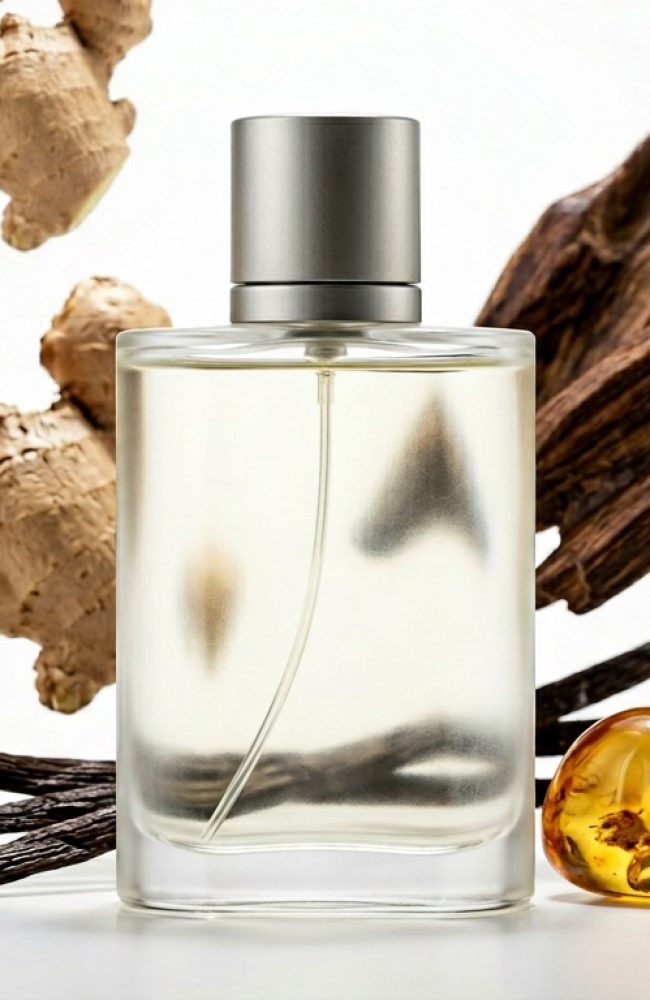
The heaviest molecules — woods, resins, musks, ambers — anchor everything above them. They evaporate slowly, fixing lighter notes in place and extending their life.
The base is what remains on a scarf the next morning. It is the memory of the perfume.
Top — 0 to 1 h
Heart — 1 to 6 h
Base — 6 h onward
Chapter 4 — The palette
Raw materials
A perfumer composes from a palette of hundreds of materials: essential oils, absolutes, resins, tinctures, and isolated molecules. Each has a smell, a weight, a price, and a story.
Transparency begins here — when a brand is willing to name its palette, the wearer can finally read the painting.
Chapter 5 — From plant to oil
Extraction methods
Steam distillation coaxes oil from roots and woods. Cold expression presses it from citrus peel. Solvent extraction captures delicate flowers that heat would destroy, yielding concretes and absolutes. CO₂ extraction does it with pressurized gas and no residue.
The method shapes the smell: the same rose, distilled or extracted, gives two different materials.
Chapter 6 — An honest comparison
Natural vs synthetic
Natural materials are complex and alive — a single rose oil contains hundreds of molecules. Synthetics are precise and consistent — one named molecule, one defined effect, often gentler on ecosystems and animals.
Neither is inherently better. What matters is honesty: knowing which is in your bottle, and why it was chosen.